
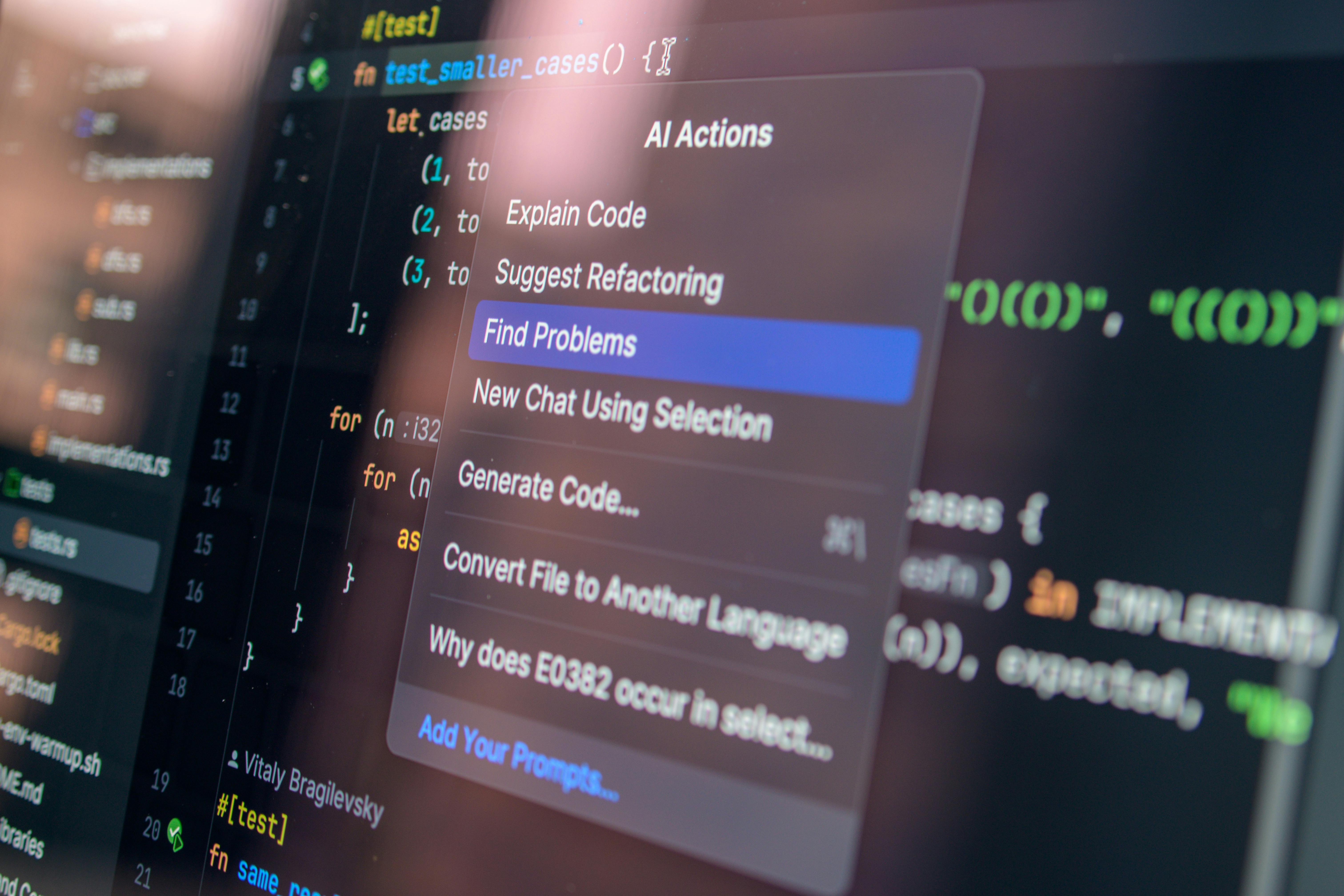
In 2026, AI isn't just a copilot; it's the architect, builder, and quality assurance expert for your code. Discover how cutting-edge AI coding assistants, generative AI tools, and enterprise AI platforms are revolutionizing developer productivity, code quality, and the entire software development lifecycle. Compare the best AI solutions for coding, debugging, security, and project management to make informed purchasing decisions and supercharge your team's workflow.
Introduction to the Topic
Welcome to 2026, where the lines between human intuition and artificial intelligence in software development have blurred into a powerful synergy. The days of AI being a mere 'copilot' are long gone. Today, AI is an indispensable partner, an 'autocoder' capable of understanding complex requirements, generating intricate codebases, debugging with surgical precision, and even managing entire project sprints. For developers, this isn't just about writing code faster; it's about elevating their craft, focusing on innovative problem-solving, and delivering higher-quality software at unprecedented speeds.
The promise of AI for coding has matured into a tangible reality, reshaping every facet of the software development lifecycle (SDLC). From initial concept to deployment and maintenance, intelligent agents are now integral, offering solutions that boost developer productivity, enhance code security, and streamline collaboration. But with a rapidly evolving landscape, choosing the right AI coding tools and platforms is paramount. This article will guide you through the current state of AI in coding, explore expert insights, and, most importantly, help you navigate the best AI solutions available on the market today to maximize your return on investment.
Backgrounds & Facts
The journey of AI in coding began modestly with intelligent autocomplete and syntax highlighting. By the early 2020s, generative AI, powered by increasingly sophisticated Large Language Models (LLMs), started to demonstrate remarkable capabilities in generating code snippets from natural language prompts. Fast forward to 2026, and the transformation is profound.
Industry reports indicate that over 70% of software development teams now integrate AI coding assistants into their daily workflows, a significant jump from less than 30% just three years prior. This adoption isn't limited to code generation. AI is actively involved in:
- Requirements Analysis: AI agents can now parse natural language requirements and translate them into actionable user stories and even initial architectural designs.
- Code Generation & Refactoring: Beyond snippets, AI can generate entire modules, APIs, and even full-stack applications based on high-level specifications, significantly reducing boilerplate code and accelerating initial development. It also excels at refactoring legacy codebases for efficiency and modernity.
- Automated Testing: AI generates comprehensive test cases, performs unit, integration, and end-to-end testing, and even predicts potential failure points, drastically cutting down testing cycles and improving software reliability.
- Debugging & Optimization: Advanced AI debugging tools don't just point to errors; they often suggest and implement fixes, and optimize code for performance, memory usage, and energy efficiency.
- Security & Compliance: AI-powered scanners identify vulnerabilities in real-time, suggest secure coding practices, and ensure adherence to regulatory compliance standards, embedding security into the development process from day one.
- Documentation: AI automatically generates and updates accurate documentation based on the codebase, solving a perennial developer pain point.
The underlying technology relies heavily on advanced multimodal LLMs, reinforced learning, and specialized neural networks trained on vast repositories of code, documentation, and successful project outcomes. This deep learning allows AI to understand context, intent, and best practices far beyond simple pattern matching.
Expert Opinion / Analysis
“We’re no longer just talking about AI assisting developers; we’re talking about AI *partnering* with developers to build software that was previously unimaginable in terms of complexity and speed,” states Dr. Anya Sharma, Chief AI Architect at InnovateTech Solutions. “The fear of job displacement has largely been replaced by an understanding that AI amplifies human potential. It takes away the mundane, repetitive tasks, freeing developers to focus on creative problem-solving, architectural design, and strategic innovation.”
However, Dr. Sharma also highlights critical challenges. “While AI-generated code is incredibly powerful, it’s not infallible. We’ve seen a rise in discussions around ‘AI-induced vulnerabilities’ – subtle bugs or security flaws that are harder to detect because they mimic human-written code. Ethical AI development, robust AI code auditing, and explainable AI (XAI) are paramount. Developers need to understand *why* the AI made certain coding decisions, not just accept them blindly.”
Another emerging trend is the rise of the 'Prompt Engineer for Code.' Developers are evolving from writing code to crafting highly specific and effective prompts that guide AI agents to generate desired outcomes. This new skill set is becoming as crucial as traditional programming languages.
Furthermore, the industry is grappling with intellectual property concerns around code generation, especially when AI models are trained on proprietary or open-source codebases. Clear licensing and attribution mechanisms are still evolving, making it crucial for organizations to choose AI platforms that offer transparency and robust legal frameworks.
💰 Best Options in Comparison (VERY IMPORTANT)
The market for AI coding solutions in 2026 is robust, offering a diverse range of tools tailored for various needs, from individual developers to large enterprises. Choosing the right platform can significantly impact your team's efficiency, code quality, and ultimately, your bottom line. Here are some of the leading platforms and specialized tools dominating the space:
-
1. QuantumDev AI (formerly GitHub Copilot X)
Overview: Evolved beyond its 'copilot' roots, QuantumDev AI is the market leader in integrated development environments (IDEs). It's a full-stack AI assistant that can scaffold entire projects, generate complex functions across multiple languages (Python, Java, C++, JavaScript, Go, Rust), refactor legacy code, and even suggest optimal cloud deployments. Its deep integration with major IDEs like VS Code, IntelliJ, and JetBrains suite makes it indispensable for millions of developers.
Key Features: Context-aware code generation, predictive debugging, automated documentation, AI-powered code review suggestions, project scaffolding, multi-language support, real-time security vulnerability scanning, performance optimization recommendations.
Ideal for: Individual developers, small to medium-sized teams, rapid prototyping, open-source projects, and organizations prioritizing seamless IDE integration and broad language support.
-
2. CodeSage AI by Google
Overview: Google's answer to the AI coding revolution, CodeSage AI leverages Google's vast AI research and cloud infrastructure. It excels in cloud-native development, microservices architecture, and API generation, especially optimized for Google Cloud Platform (GCP) and Kubernetes environments. It offers advanced capabilities for orchestrating complex distributed systems and ensuring high scalability and resilience.
Key Features: Cloud-native code generation (GCP focus), microservices pattern generation, API design and implementation, intelligent infrastructure-as-code (IaC) generation, automated deployment pipelines, advanced observability integration, multi-cloud compatibility (with GCP emphasis).
Ideal for: Teams heavily invested in Google Cloud, large enterprises building scalable cloud-native applications, microservices architects, and organizations focused on high-performance distributed systems.
-
3. SynapseCode Enterprise
Overview: SynapseCode is a comprehensive enterprise-grade AI development platform designed for large organizations with stringent security, compliance, and governance requirements. It offers customizable AI models that can be trained on a company's proprietary codebase, ensuring generated code adheres to internal standards and best practices. It supports both on-premise and hybrid cloud deployments.
Key Features: Custom AI model training (on proprietary code), robust governance and compliance frameworks, advanced intellectual property protection, comprehensive security auditing, role-based access control, secure software supply chain integration, enterprise-level support.
Ideal for: Large enterprises, financial institutions, government agencies, and organizations with strict regulatory compliance, proprietary codebases, and a need for highly controlled AI development environments.
-
4. BugBounty AI Pro
Overview: While not a full-stack coding assistant, BugBounty AI Pro is a specialized, best-in-class solution for AI-powered security analysis and automated penetration testing. It integrates seamlessly with existing CI/CD pipelines, providing real-time vulnerability detection, exploit simulation, and intelligent remediation suggestions, significantly reducing the attack surface of applications.
Key Features: Real-time vulnerability scanning (SAST/DAST), exploit simulation, intelligent remediation suggestions, compliance reporting (GDPR, HIPAA, SOC 2), automated penetration testing, supply chain security analysis, API security testing.
Ideal for: Any development team prioritizing security, DevOps teams, security auditors, and organizations needing robust, automated security assurance throughout the SDLC. Can be used in conjunction with other coding assistants.
| Feature / Tool | QuantumDev AI | CodeSage AI by Google | SynapseCode Enterprise | BugBounty AI Pro |
|---|---|---|---|---|
| Primary Focus | General-purpose IDE integration, full-stack code generation, productivity | Cloud-native dev, microservices, API generation, GCP optimization | Enterprise-grade governance, custom models, security, compliance | Specialized security analysis, automated pen-testing, vulnerability detection |
| Target Audience | Developers, SMBs, rapid prototyping | Cloud architects, enterprise teams on GCP | Large enterprises, highly regulated industries | DevOps, Security teams, any dev team needing robust security |
| Key Strengths | Broad language support, deep IDE integration, comprehensive assistance | GCP ecosystem synergy, scalable architecture, API-first approach | Customization, compliance, IP protection, robust security | Real-time vulnerability detection, exploit simulation, compliance reporting |
| Deployment Options | Cloud-based (SaaS) | Cloud-based (GCP-centric SaaS) | Cloud, Hybrid, On-premise | Cloud-based (SaaS), On-premise agent |
| Pricing Model | Subscription (per user/month), enterprise tiers | Usage-based, subscription tiers, GCP credits | Custom enterprise licensing, volume discounts | Subscription (per project/month or per scan), enterprise plans |
| Unique Selling Point | Ubiquitous integration, unparalleled developer experience | Deep integration with GCP, superior for cloud-native ecosystems | Tailored AI models, stringent governance, data residency | Proactive security at scale, AI-driven exploit prediction |
When considering your investment, evaluate your team's specific needs, existing tech stack, security requirements, and budget. Many organizations find a hybrid approach, combining a general-purpose AI coding assistant with specialized tools like BugBounty AI Pro, yields the best results.
Outlook & Trends
The future of AI for coding in 2026 and beyond promises even more revolutionary advancements:
- Autonomous AI Agents: Expect to see AI agents capable of taking a high-level user story and autonomously designing, coding, testing, and deploying a feature or even an entire application with minimal human intervention. Developers will become more like orchestrators and auditors of these AI agents.
- Hyper-Personalized AI: AI coding assistants will become even more tailored to individual developers' coding styles, preferences, and historical projects, learning and adapting to specific team conventions and architectural patterns.
- Explainable AI (XAI) for Code: As AI generates more complex code, XAI will become crucial. Tools will emerge that can explain the rationale behind AI-generated code, its performance implications, and potential security risks, fostering trust and enabling better human oversight.
- AI-Native Development Environments: New IDEs and platforms will be built from the ground up to deeply integrate AI, moving beyond current plugin-based approaches to offer a truly AI-first development experience.
- Ethical AI & Governance: The focus on ethical considerations, data privacy, and intellectual property will intensify. AI tools will incorporate stronger safeguards, attribution mechanisms, and compliance features to ensure responsible code generation.
- AI for Low-Code/No-Code: AI will dramatically enhance low-code/no-code platforms, allowing business users to describe complex application logic in natural language, with AI translating it into functional software, further democratizing development.
The developer of tomorrow will be less of a coder and more of a problem solver, architect, and AI whisperer, leveraging intelligent tools to build the future.
Conclusion
In 2026, AI is not just changing how we code; it's redefining what it means to be a developer. From automating boilerplate tasks to intelligent debugging and robust security analysis, AI coding platforms are empowering teams to achieve unprecedented levels of productivity, innovation, and code quality. The market offers a rich array of solutions, from comprehensive assistants like QuantumDev AI and cloud-optimized platforms like CodeSage AI to enterprise-grade solutions like SynapseCode and specialized security tools like BugBounty AI Pro.
The key to success lies in strategically integrating these AI tools into your existing workflows, understanding their strengths, and continuously upskilling your team to work effectively alongside AI partners. Embrace the future, explore the options, and invest wisely in the AI coding solutions that will propel your projects forward. The era of the AI-augmented developer is here, and it's exhilarating.