
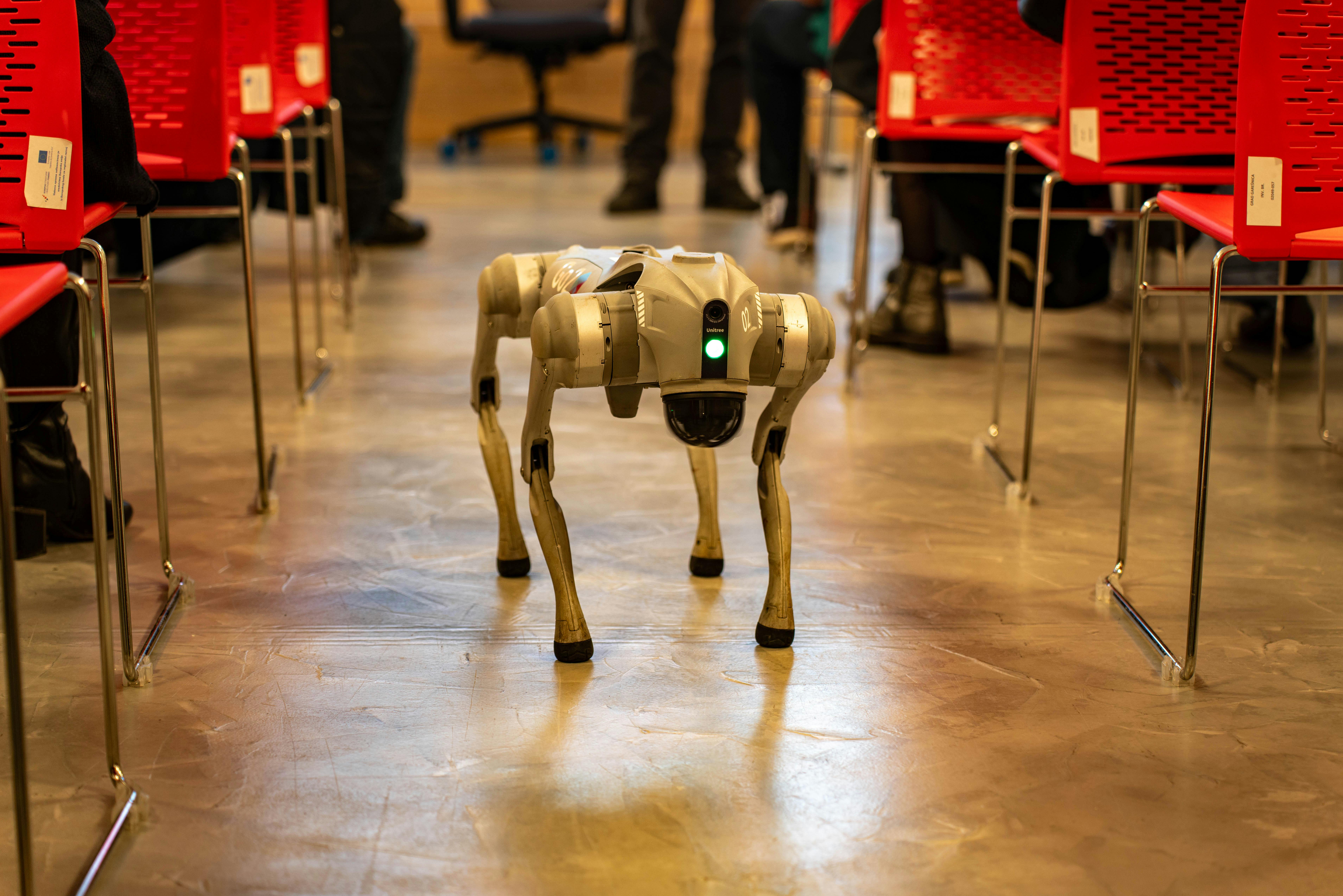
The year is 2026, and generative AI for 3D content creation is no longer a futuristic dream—it's the bedrock of the burgeoning metaverse and digital twin industries. Discover how AI is transforming 3D modeling, animation, and virtual world development, and compare the leading platforms and services to help you invest wisely in the future of immersive experiences and AI-powered design automation. Find the best AI 3D tools and metaverse creation software for your business.
Introduction to the Topic
Welcome to 2026, where the digital canvas has expanded into infinite dimensions, and AI is the master sculptor. The once laborious and expertise-intensive process of creating high-fidelity 3D assets, intricate virtual environments, and expansive metaverse worlds has been fundamentally redefined by generative AI. No longer are creators solely bound by manual design; AI algorithms now conjure complex geometries, textures, animations, and even entire virtual ecosystems from simple text prompts, 2D images, or rough sketches. This isn't just an evolutionary step; it's a quantum leap, democratizing 3D content creation and accelerating the development of the enterprise metaverse, immersive gaming, digital twins, and virtual reality experiences.
The implications are profound. Businesses are slashing development costs, accelerating time-to-market for digital products, and unlocking unprecedented levels of personalization and scale. From architectural visualization to game development, e-commerce product showcases to industrial simulations, generative AI is becoming the indispensable engine behind every pixel and polygon in the virtual realm. For anyone looking to build, innovate, or compete in the rapidly expanding digital frontier, understanding and leveraging these AI-powered tools is not just an advantage—it's a necessity. This article will guide you through the seismic shifts, reveal expert insights, and, most crucially, help you navigate the top platforms and services to make the smartest investment decisions.
Backgrounds & Facts
The journey from rudimentary AI-assisted design to full-fledged generative 3D has been swift and relentless. Just a few years ago, AI could generate impressive 2D images; today, it effortlessly crafts photorealistic 3D models, complete with PBR textures, rigging, and animation sequences. This rapid advancement is fueled by massive datasets of 3D models, advancements in neural rendering, and increasingly powerful computational resources (think quantum-inspired processing and specialized AI accelerators becoming mainstream).
Market projections for the generative AI in 3D content market are staggering. Analysts predict a compound annual growth rate (CAGR) exceeding 40% through 2030, with the market value potentially hitting hundreds of billions of dollars. Key drivers include the escalating demand for metaverse content, the proliferation of digital twin applications in manufacturing and urban planning, and the continuous innovation in gaming and entertainment. Companies are grappling with the need for vast amounts of unique 3D content that traditional manual workflows simply cannot deliver at scale or speed.
Furthermore, the integration of AI-generated 3D assets into existing game engines (like Unreal Engine 6 and Unity's latest iterations), CAD software, and enterprise platforms (such as NVIDIA Omniverse) has become seamless. This interoperability is crucial, transforming AI from a standalone novelty into a core component of professional workflows. The ability to iterate designs in minutes rather than weeks, to generate variations for A/B testing, or to personalize virtual experiences on the fly, represents a paradigm shift that savvy businesses are already capitalizing on to gain a competitive edge in 2026.
Expert Opinion / Analysis
"The generative AI revolution in 3D is not just about automation; it's about augmentation," states Dr. Anya Sharma, lead AI Ethicist at Virtual Horizons Corp. "It empowers creators to focus on narrative and vision, offloading the repetitive, technical tasks to intelligent algorithms. By 2026, we're seeing a clear division: 'AI-assisted creation' for speed and scale, and 'human-curated AI' for bespoke, high-art projects. The ethical considerations around ownership, bias in generated content, and the environmental impact of training these colossal models are now paramount for responsible deployment."
Echoing this sentiment, Mark Chen, CEO of 'Metaverse Architects AI', a leading consultancy firm, adds, "For enterprises, generative AI for 3D is a strategic imperative. We're seeing demand for AI-driven digital twin solutions that can model entire factories or cities, dynamically updating based on real-world data. It's about simulating the future, optimizing operations, and creating immersive training environments. Companies that fail to adopt these tools will find themselves outpaced by competitors who can iterate faster, visualize better, and scale their virtual presence more efficiently."
The consensus among industry leaders is clear: the future of 3D content is intrinsically linked with AI. The focus is shifting from simply generating assets to creating intelligent, interactive, and adaptive virtual worlds. This means AI not only builds the environment but also populates it with dynamic elements, responsive NPCs, and emergent narratives, pushing the boundaries of what's possible in immersive storytelling and functional digital spaces. The next battleground will be in the sophistication of AI control, offering users granular yet intuitive command over the generative process.
💰 Best Options in Comparison (VERY IMPORTANT)
Navigating the burgeoning landscape of AI 3D tools and metaverse platforms can be daunting. To help you make informed decisions, we've analyzed the top contenders in 2026, focusing on their unique strengths, target audiences, and pricing models. Whether you're an indie creator, an enterprise looking to build a digital twin, or a studio developing the next AAA game, there's an AI solution tailored for your needs. Remember, many platforms offer tiered subscriptions, enterprise licenses, or credit-based systems, so always check for the latest pricing and features.
-
1. NVIDIA Omniverse (with Generative AI Extensions)
Target User: Large enterprises, industrial designers, engineering firms, professional game studios, digital twin developers.
Key Features: A powerful, extensible platform for 3D design collaboration and simulation. Its generative AI extensions (like Omniverse ACE for character AI, Audio2Face for animation, and advanced physics-based generative simulation tools) allow for the creation of hyper-realistic digital twins, industrial metaverse applications, and complex virtual worlds. Unmatched real-time ray tracing and path tracing capabilities. Deep integration with industry-standard software via USD.
Pricing Model: Enterprise licenses, developer licenses (some free tiers for research/indie), cloud-based services. Varies significantly based on scale and specific module usage.
-
2. GenCraft 3D Studio AI
Target User: Indie game developers, small to medium creative studios, artists, educators, rapid prototyping teams.
Key Features: A user-friendly, web-based platform specializing in rapid 3D asset generation from text prompts, 2D images, or even video. Features include AI-driven texture generation, automatic rigging, LOD generation, and style transfer. Focuses on intuitive workflows and quick iteration. Integrates with popular game engines and 3D modeling software via plugins and API.
Pricing Model: Subscription-based (monthly/annual tiers: Basic, Pro, Studio), credit-based system for advanced generations. Free trial available.
-
3. Stability AI's Stable 3D Forge
Target User: Developers, researchers, custom pipeline builders, cost-sensitive projects, open-source enthusiasts, academic institutions.
Key Features: Leveraging the open-source ethos of Stability AI, Stable 3D Forge provides powerful foundational models for 3D generation, including text-to-3D, image-to-3D, and neural radiance fields (NeRF) pipelines. Highly customizable and extensible. Offers both local deployment options and cloud API access. Strong community support and continuous innovation.
Pricing Model: Primarily open-source (free for personal/non-commercial use), commercial licenses for enterprise deployment, API access fees for cloud services.
-
4. Metaverse Architects AI (Consulting & Custom Solutions)
Target User: Large corporations, brands, government agencies, any entity requiring bespoke metaverse development, complex integrations, or strategic AI implementation.
Key Features: Not a software tool, but a premium service provider. Specializes in end-to-end metaverse strategy, custom virtual world development, AI-driven asset pipelines, digital twin integration, and ethical AI deployment. Leverages best-in-class generative AI tools and proprietary algorithms to deliver tailored, high-fidelity immersive experiences.
Pricing Model: Project-based fees, retainer agreements for ongoing support, custom enterprise contracts. Typically a significant investment for comprehensive solutions.
| Platform / Service | Target User | Key Strengths | Pricing Model | Best For |
|---|---|---|---|---|
| NVIDIA Omniverse | Enterprise, Industrial, Pro Studios | Scalability, Real-time Simulation, Digital Twins, Collaboration, High Fidelity | Enterprise Licenses, Cloud Services | Large-scale industrial metaverse, complex simulations, professional game development |
| GenCraft 3D Studio AI | Indie Developers, Small Studios, Artists | Ease of Use, Rapid Prototyping, Web-based, Quick Asset Generation | Subscription (Monthly/Annual), Credit-based | Fast iteration, creative exploration, small project asset creation |
| Stable 3D Forge (Stability AI) | Developers, Researchers, Custom Pipelines | Open-Source, Customizable, Foundational Models, Community Driven | Free (OSS), Commercial Licenses, API Fees | R&D, custom tool development, budget-conscious projects, academic use |
| Metaverse Architects AI | Large Corporations, Brands, Government | Bespoke Solutions, Strategic Consulting, Complex Integration, White-glove Service | Project-based, Retainer, Custom Contracts | Full-service metaverse strategy, high-end custom virtual world development |
Outlook & Trends
Looking ahead, the generative AI 3D landscape in 2026 is poised for even more transformative shifts. We anticipate several key trends:
-
Hyper-Personalization at Scale: AI will enable real-time generation of custom assets and environments based on individual user preferences, biometric data, or even emotional states, leading to truly unique and adaptive metaverse experiences. Imagine an e-commerce metaverse where products are dynamically rendered to match your personal style preferences.
-
Integrated AI Agents: Beyond just generating static assets, AI agents will become capable of creating dynamic, interactive 3D scenarios. These agents will not only build the world but also populate it with intelligent NPCs, create dynamic narratives, and even respond to user input by generating new 3D elements on the fly. This will pave the way for emergent storytelling and truly autonomous virtual worlds.
-
"Zero-Shot" 3D Generation: While current tools often require some form of input (text, image, sketch), future AI models will move towards "zero-shot" generation, creating complex, contextually aware 3D scenes with minimal or no explicit input, simply by understanding broader intent or abstract concepts.
-
Ethical AI & Explainability: As AI becomes more pervasive, the demand for transparent, explainable, and ethically sound generative models will grow. Tools will integrate features for detecting and mitigating biases in generated content, ensuring fair representation, and providing clear provenance for AI-created assets.
-
Hardware Acceleration & Edge AI: The increasing complexity of generative 3D models will drive further innovation in specialized AI hardware. Edge AI solutions will allow for real-time 3D generation and rendering on local devices, reducing latency and reliance on cloud infrastructure, particularly important for AR/VR applications.
The convergence of generative AI with spatial computing, haptics, and advanced networking will continue to blur the lines between the physical and digital, making the generated 3D worlds indistinguishable from reality for many users.
Conclusion
The generative AI 3D revolution is here, fundamentally reshaping how we conceive, create, and interact with virtual worlds. In 2026, it's no longer a question of 'if' but 'how' you integrate these powerful tools into your creative or business workflow. From accelerating product design and digital twin development to crafting breathtaking metaverse experiences and next-generation games, the opportunities are limitless for those willing to embrace this technological frontier.
Whether you opt for an enterprise-grade platform like NVIDIA Omniverse, a creator-focused solution like GenCraft 3D Studio AI, leverage the open-source power of Stable 3D Forge, or seek bespoke solutions from experts like Metaverse Architects AI, the key is to understand your specific needs and choose the tools that align with your strategic vision. The future of 3D is intelligent, automated, and incredibly exciting. Don't just observe this revolution—be a part of it, and start building your virtual empire today.